
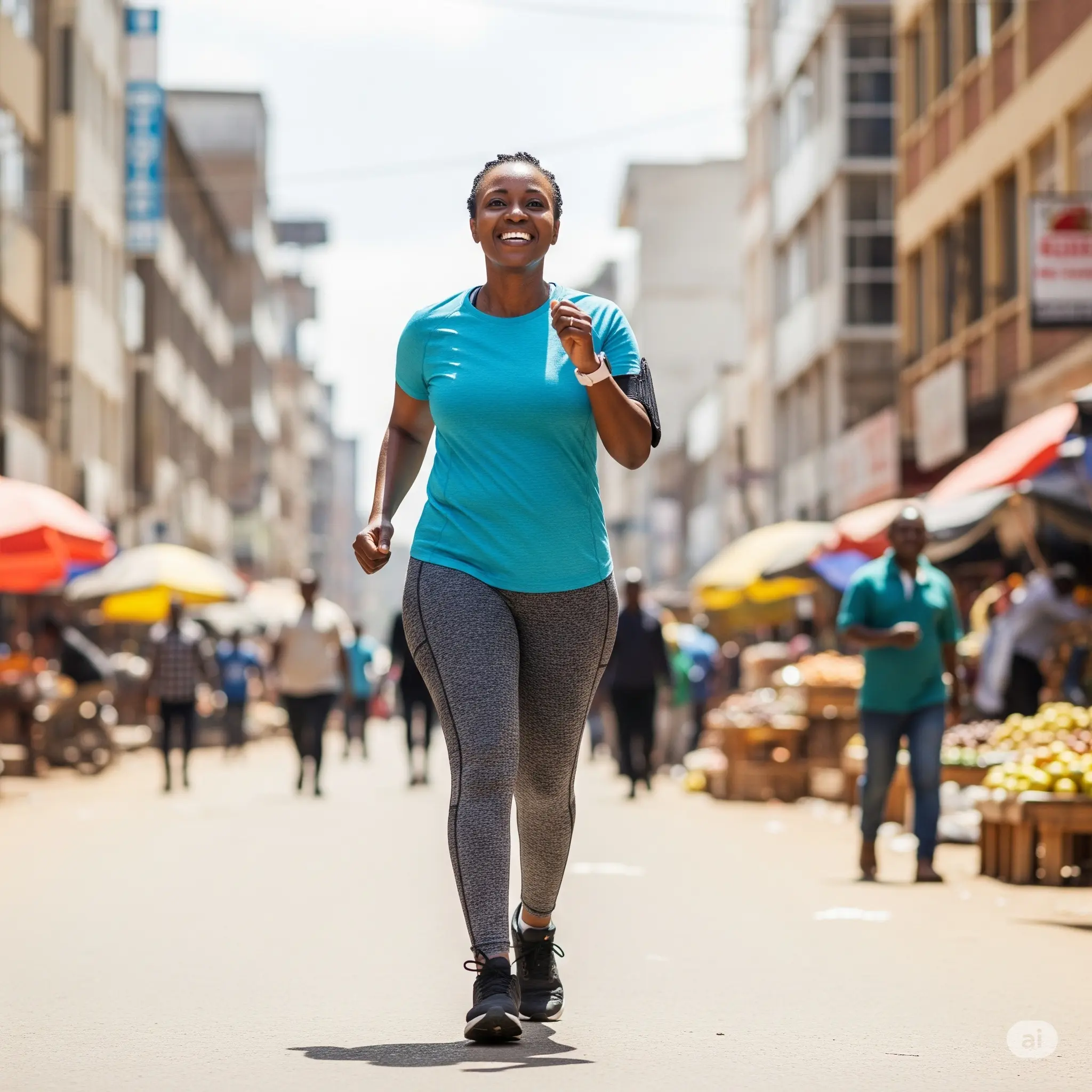
In 2018, I was diagnosed with Type 2 diabetes after rushing from Mbarara, Uganda, to a Kenyan hospital with DKA. For years, I did little, overwhelmed and unsure. Then, in 2023, I launched my 100-day 10k steps challenge. The day I hit 10,000 steps — sun shining, playlist pumping — I felt my body come alive. My feet and I were finally a team.
I used to think walking was too simple to matter. But inspired by stories like Musa from Tanzania, who shared on X how walking reversed his prediabetes, I started small: 2,000 steps, then 5,000, then 10,000 daily. It wasn’t about weight loss — it was about reclaiming my rhythm.
What Changed When I Moved
- Blood sugar stabilized – My fasting glucose dropped from 7.8 to 5.2 mmol/L, backed by a 2020 Journal of Diabetes Research study showing walking lowers blood sugar by 20%.
- Mood soared – Endorphins from walking lifted my spirits, per a 2021 Frontiers in Psychology study.
- Sleep improved – Regular movement enhances sleep quality, says a 2022 Sleep Medicine review.
- Cravings faded – Walking curbed my sugar urges.
- Energy returned – I felt vibrant, like Chidi from Nigeria, who walked his way to diabetes remission.
Walking became my anchor — my therapy, my prayer, my time to dream. No gym needed, just a
decision.
Why It Matters
Across Africa, movement is saving lives. In South Africa, community walking groups reduced diabetes rates by 30%, per a 2022 African Journal of Primary Health Care. Your feet are free, powerful tools. Start with a lap around your shamba, dance with your kids, or pace during a call. A 2021 The Lancet study found 30 minutes of daily walking cuts diabetes risk by 35%.